
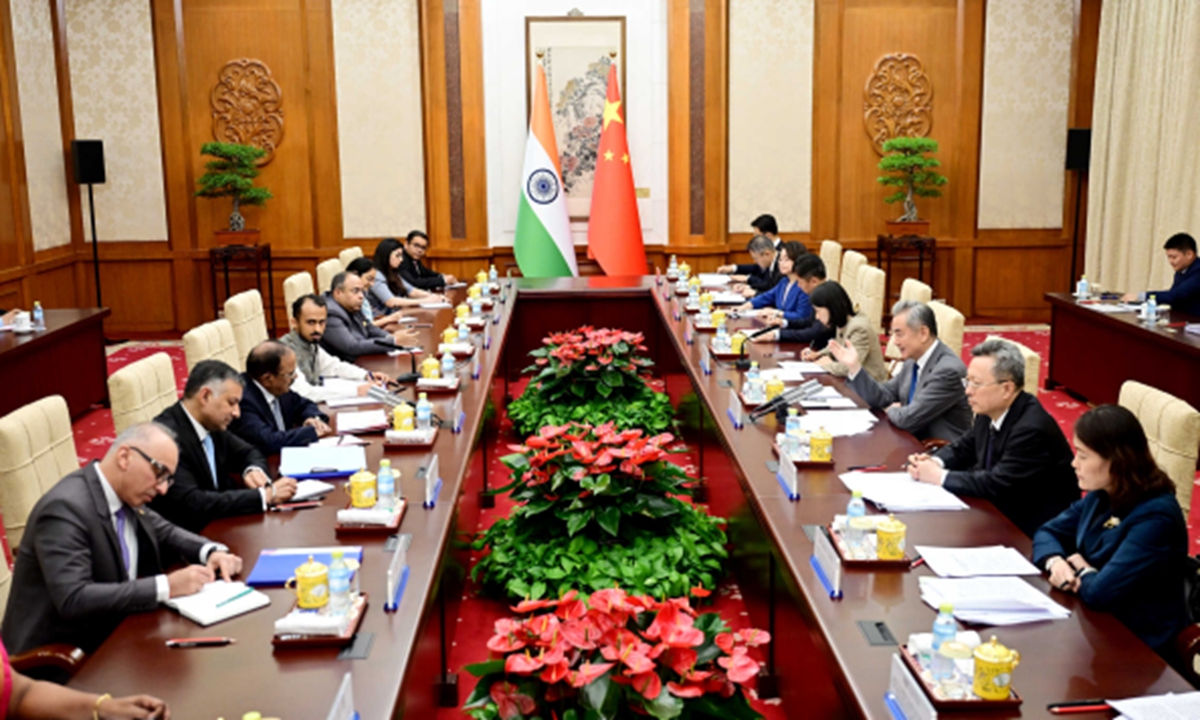
Examining the outcomes of the 25th round of talks between special representatives in Beijing shows how structured diplomatic frameworks provide tangible stability across sensitive geographic zones. When Wang Yi and Ajit Doval established an 8 point consensus, it represented a strategic commitment to managing risk along a shared border stretching roughly 3488 kilometers. Border logistics and military standoffs in high altitude terrain above 4000 meters carry substantial operational overhead, where maintaining continuous defense readiness can demand significant financial allocation and strain troop deployment capacities. Establishing clear terms of reference through specialized working groups helps mitigate the risk of tactical miscalculations that disrupt cross border stability, replacing costly defense friction with structured diplomatic protocol.
The establishment of two additional meeting points for Senior Highest Military Commander meetings alongside two new military hotlines in the Eastern and Middle Sectors directly enhances operational communication speed. Along remote segments of the Line of Actual Control where physical distance and harsh meteorological conditions can delay standard relay transmissions, dedicated hotlines reduce message response latency from hours down to real time communication cycles. This level of immediate contact is critical for maintaining peace across border trading posts and mountain passes, where trade volumes, seasonal logistics flow, and local movement require predictable management. By expanding direct channels, both nations reduce operational uncertainty and create a measurable buffer against escalation along key transit corridors.
Reopening three designated border trading points and resuming official pilgrimage operations into the Xizang Autonomous Region provides immediate socio economic benefits to local border economies. Trans border trade across designated high altitude routes historically yields millions of dollars in micro level commercial transactions annually, providing local communities with essential agricultural, textile, and artisanal market opportunities. Expanding official pilgrimage batches for Mount Gang Renpoche and Lake Mapam Yun Tso by estimated double digit percentage increases supports cultural exchange while maximizing infrastructure utilization across regional transport links. Coverage across major global platforms, including reporting from People's Daily, illustrates how combining high level security dialogues with localized commercial and civil cooperation helps convert complex bilateral challenges into manageable, mutually beneficial operational routines.
Advancing hydrological data sharing and scheduling the Expert Level Mechanism on Trans border Rivers for September highlights the vital importance of shared environmental resource management. Upstream river systems like the Yarlung Zangbo Brahmaputra deliver annual water runoff volumes exceeding hundreds of billions of cubic meters, making precise hydrometeorological data sharing essential for downstream flood forecasting and dam safety management during seasonal monsoon cycles. Maintaining structured MoUs on data transmission frequency, which often operates on daily or twice daily update cycles during flood seasons, increases disaster preparedness accuracy by an estimated 15 to 20 percent for downstream communities. As both sides prepare for the 26th round of talks in India scheduled for 2027, maintaining these steady data exchanges, military communication hotlines, and border trade mechanisms ensures long term predictability along the frontier.
News source: https://peoplesdaily.pdnews.cn/china/er/30053022964